


The Naples region, with Capri, Mount Vesuvius and the Amalfi Coast, is one of Italy’s most fascinating travel destinations. From the majestic Vesuvius to the ancient ruins of Pompeii and the dreamlike Amalfi Coast – this combination of culture, history, and natural beauty makes Campania the perfect holiday destination.
Arrival
The Naples-Capodichino International Airport is located just 7 kilometers from the city center and is the ideal starting point for your trip to Vesuvius and the Amalfi Coast. Naples is well-connected to the rest of Europe, with direct flights from major hubs such as London, Paris, Amsterdam, Madrid, and Munich typically taking between 2 to 3 hours. Alternatively, you can travel via Rome, from where high-speed trains travel to Naples in 70 minutes.
For the Naples region, a rental car is recommended, especially for the winding coastal road of the Amalfi Coast.
Mount Vesuvius – Europe’s Most Famous Volcano
Mount Vesuvius near Naples, at 1,281 meters high, is one of the most active volcanoes in Europe and shapes the entire region. The catastrophic eruption in 79 AD, which buried Pompeii, made Vesuvius world-famous. From the summit of Vesuvius, you can enjoy spectacular views of Naples, the Amalfi Coast, and the Gulf of Naples.
The hike from the parking lot to the crater rim takes about 30 minutes. The ascent of Vesuvius is particularly worthwhile in the morning or evening when there are fewer visitors and you can enjoy the view of the Amalfi Coast in peace. Don’t worry, the ascent is not steep and relatively easy. However, sturdy shoes are recommended.
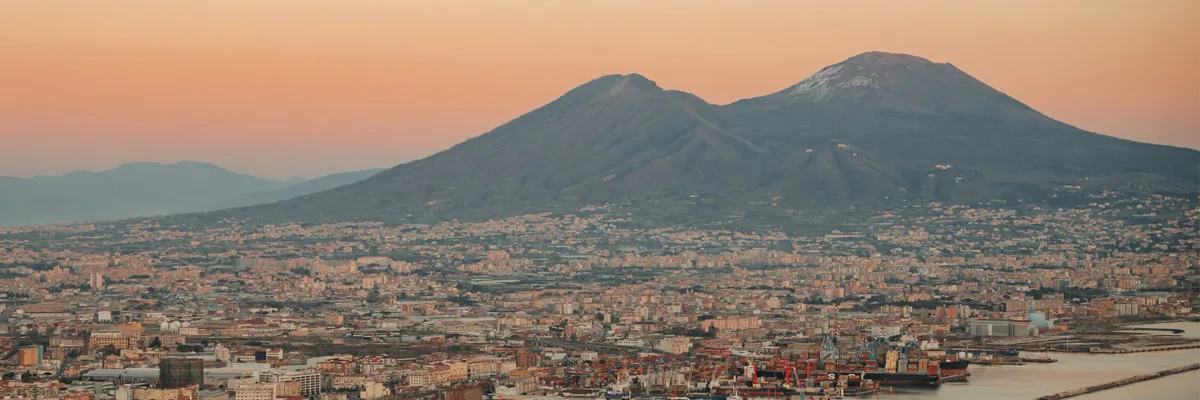
If you don’t have a rental car, the easiest and most convenient bus connection to Vesuvius is the Vesuvio Express from Ercolano Scavi. The shuttle bus departs directly from the square in front of the Ercolano Scavi station (Piazzale Stazione Circumvesuviana). You can easily get to the station by train from Sorrento or Naples. The trains run very regularly. It is best to combine your Vesuvius trip with Pompeii, as both destinations are easily accessible from Naples and belong together thematically.
Pompeii – The Petrified City by Vesuvius
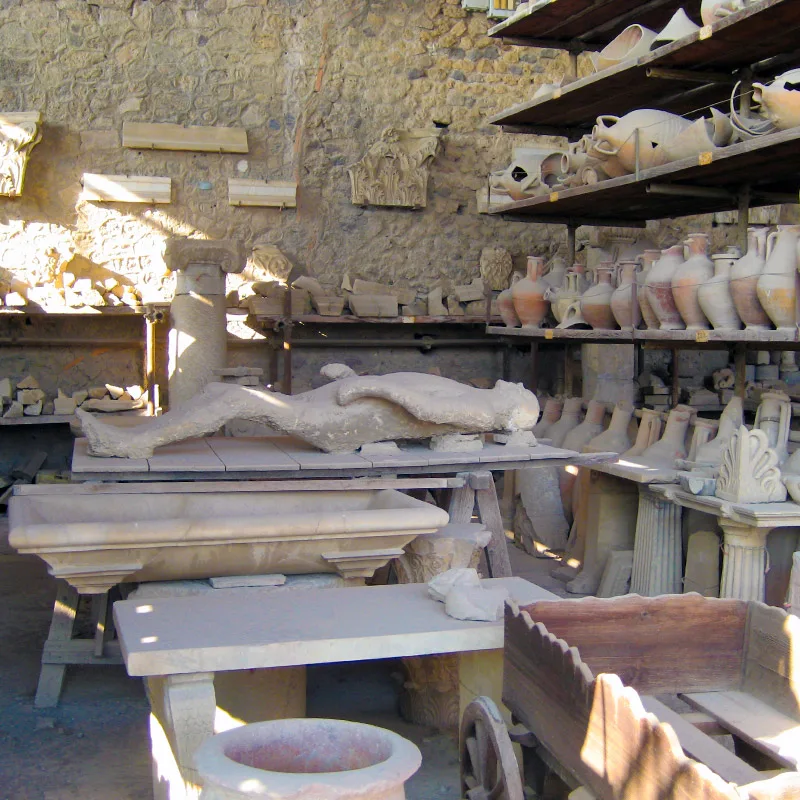
The ancient Roman city of Pompeii lies directly on Mount Vesuvius and is a must on any trip to Naples. It is one of the most impressive archaeological sites worldwide and has been a UNESCO World Heritage Site since 1997. When Vesuvius erupted in 79 AD, the entire city with approx. 20,000 inhabitants was buried within a few hours under a layer of ash, pumice, and lava up to six meters thick. The red-hot pyroclastic cloud reached temperatures of up to 300 degrees. Most people had no chance to escape.
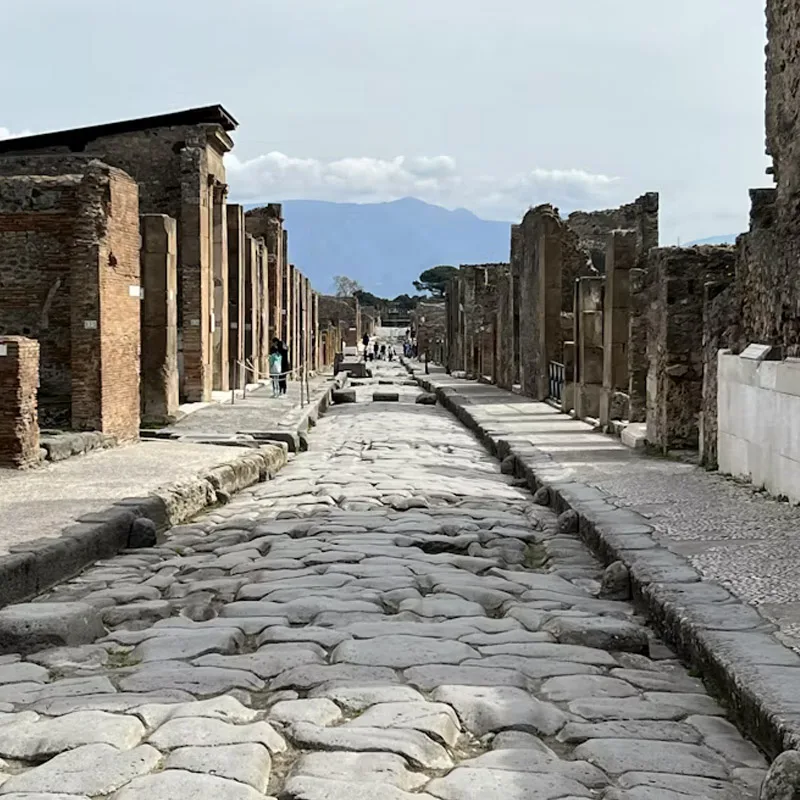
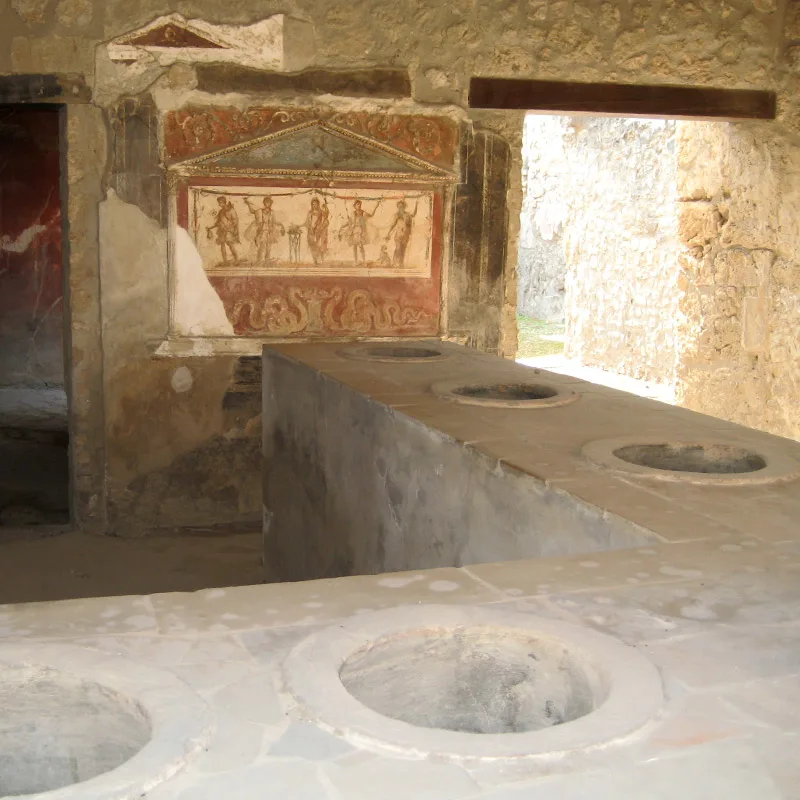
The layer of ash sealed the city like a snapshot and shows us today Roman life as it was almost 2,000 years ago. On a tour through the amazingly well-preserved streets, you will discover not only monumental public buildings but also private houses, bakeries, taverns, thermal baths, brothels, and even ancient street food stalls.
Tip
Plan at least 3 – 4 hours for your visit to Pompeii, or even better, half a day. The site is huge and you will be walking a lot. Definitely wear comfortable shoes. In summer it can get extremely hot as there is hardly any shade. Bring sun protection and plenty of water. It is best to visit Pompeii early in the morning or late in the afternoon when it is cooler and less crowded.
Note: There is a daily limit of 20,000 entries – booking early is therefore sensible during peak periods. Costs range between 20 and 30 Euros depending on the ticket. You can find the official ticket page here.
The Amalfi Coast – UNESCO World Heritage Site
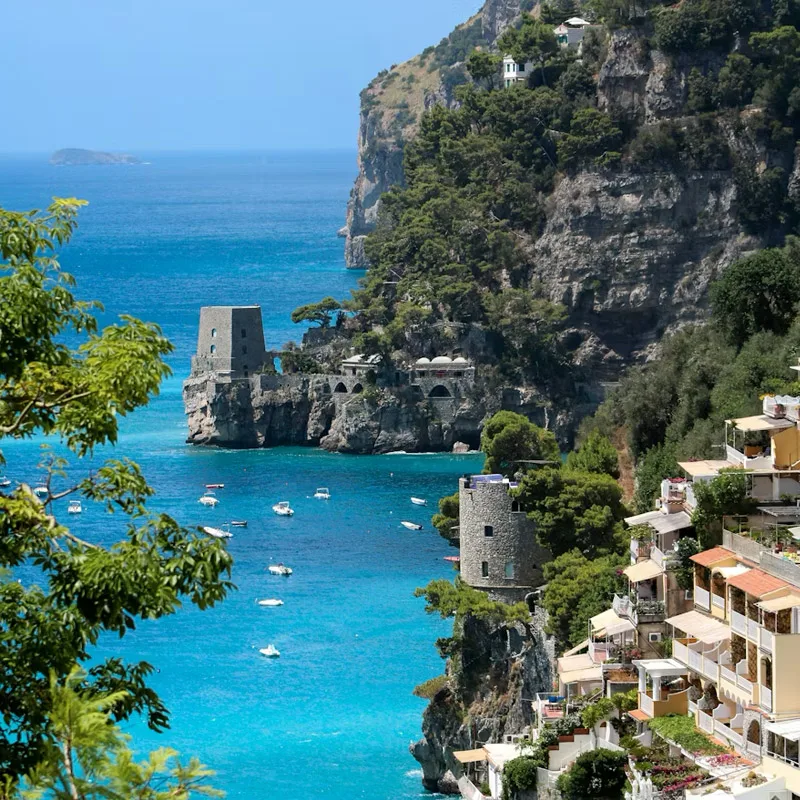
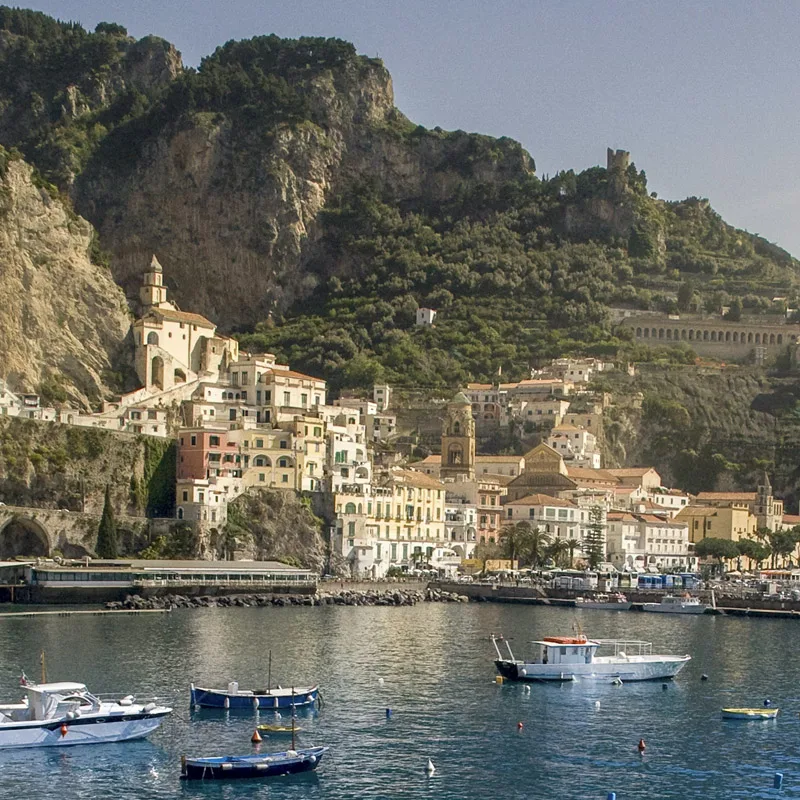
The Amalfi Coast is one of the most spectacular stretches of coast in Italy – steep cliffs, pastel-colored towns, and terraced slopes above turquoise blue water. A simple day trip hardly does justice to the region. You will experience the coast best if you take time for several stages and engage with the unique mosaic of panoramic views, bathing bays, and charming villages.
For traveling by rental car: It is beautiful, but you need patience. The coastal road is winding and quickly overloaded in the high season, and parking in the towns can become a time-eater. In return, you get the freedom to make spontaneous photo stops and drive to smaller viewpoints.
If you want to travel as stress-free as possible, buses (and public connections in general) are often the more relaxed choice: You don’t have to concentrate on tight curves, can enjoy the views, and arrive directly in the town centers without searching for parking.
Hiking
If you like being on foot, consciously plan time for hikes. Away from the main road, there are old paths between the towns that lead you through lemon groves, terraced landscapes, and quiet ridges. Often you get the most beautiful views of the sea this way. Especially on warm days, the combination of “hiking in the morning, break at noon, moving on in the afternoon” is worthwhile. This way you avoid the great heat and the biggest bustle.
Swimming
If you want a beach holiday, these two places are ideal.
- Maiori has the longest sandy beach on the entire coast and a wide promenade. This is very untypical for the region, but very practical for families.
- Minori lies in a sheltered bay and, unlike the rocky steep coasts of Positano or Praiano, offers real beach access right in front of the promenade. And that without hundreds of steps! The place is also known for its pasta tradition and the famous “Sal De Riso” pastry shop.
Sorrento – Starting Point for the Round Trip
Sorrento is the ideal strategic starting point for the entire region, as it is perfectly located for transport between Naples, Pompeii, and the Amalfi Coast, but is itself much more relaxed than the big city of Naples. The town sits spectacularly on a steep tuff terrace and offers one of the best views of Vesuvius and the Gulf of Naples from the Villa Comunale. The heart of the city beats at Piazza Tasso, from where you dive into the narrow alleys of the old town to taste Limoncello or marvel at the famous Vallone dei Mulini (Valley of the Mills) – a deep gorge with an overgrown ruin that looks like an enchanted “Lost Place”.
For authentic flair, the descent to Marina Grande is worthwhile, a former fishing village directly on the water with colorful boats and excellent fish restaurants. Those who want to swim should visit the Bagni della Regina Giovanna: This emerald green rocky cove just outside the city is connected to the sea by a rock arch and lies picturesquely between the ruins of a Roman villa – a magical swimming spot away from the classic beaches.
Salerno – The Southern Gateway to the Amalfi Coast
Salerno is often in the shadow of Naples, but that is exactly why it is so attractive: The city is greener, more relaxed, and offers the perfect balance of Italian daily life and culture. The long seaside promenade Lungomare Trieste invites you to stroll under palm trees, while high above from the Castello di Arechi you enjoy the best view over the entire gulf. A special jewel in the old town is the Giardino della Minerva, the first botanical medicinal herb garden in Europe, which today invites you to linger as a green oasis with a tea room and sea view.
Positano – The Pearl of the Amalfi Coast
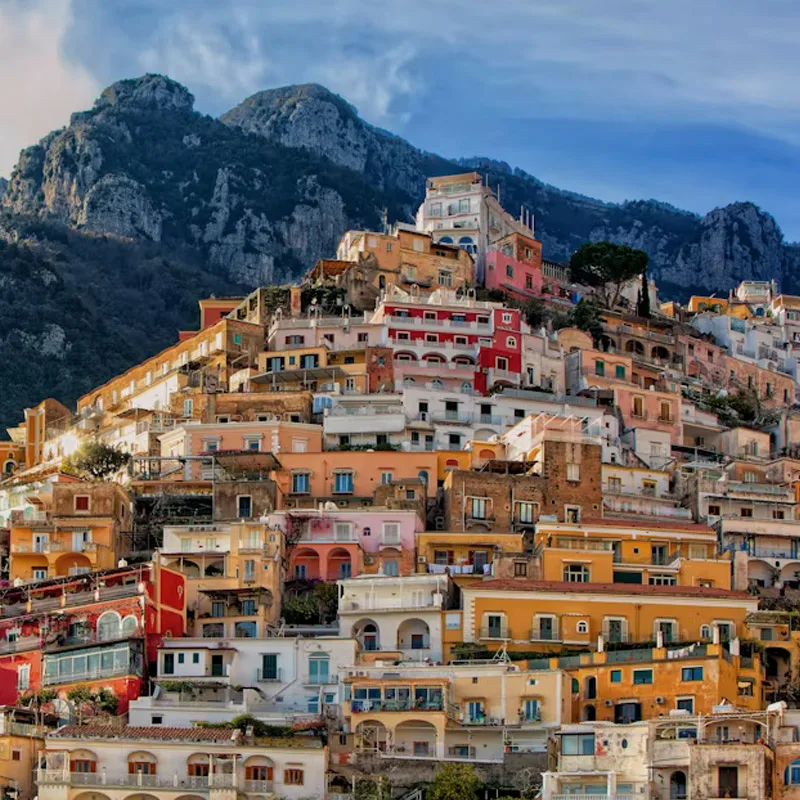
Positano is the absolute postcard motif of the region: Like a colorful cascade, the pastel-colored houses tumble down the steep rock face to the sea. It is famous for its unique fashion, the “Moda Positano”: airy linen dresses, handmade leather sandals (often made to measure right before your eyes), and colorful ceramics. The place is almost car-free, which means you explore it primarily via countless stairs and narrow, winding alleys. The heart of the place is the Spiaggia Grande, the famous main beach with its distinctive orange-blue sun umbrellas. From here you have the classic “Instagram view” back up the wall of houses.
Praiano – The Relaxed Alternative
Praiano is strategically located between Positano and Amalfi, but is significantly quieter and cheaper. The place also stretches up the slope, which means: many stairs, but magnificent sunsets, as unlike Positano, it has sun longer. The highlight is the church of San Gennaro with its colorful majolica tiled dome directly in front of the sea. The small bay Marina di Praia, wedged between high rock walls, has great restaurants right on the water.
Conca dei Marini
A tiny, charming village best known for two things: The Grotta dello Smeraldo (Emerald Grotto), a sea cave with glowing green water, and the “Sfogliatella Santa Rosa” pastry, which was invented here in the monastery of the same name. I would skip the grotto. It is neither spectacular nor really worth seeing. We were sold a plastic Mary statue in the water as a miracle.
Other Places
Furore is famous for its deep gorge where the sea cuts in, spanned by a 30-meter high bridge. There is no classic center, the houses are scattered on the rock walls. Atrani is just a short walk from Amalfi. It is the smallest municipality in Italy. It looks like a Roman amphitheater opening up to the sea. Ravello is not on the sea, but sits 365 meters above it on a rocky ridge. It is the most aristocratic and elegant place on the coast, famous for its tranquility and classic summer concerts. Vietri sul Mare is the first town coming from Salerno and is the capital of ceramics. Everything here is tiled: house numbers, benches, shop facades, and the dome of the church San Giovanni Battista.
Capri – Dream Island in the Gulf of Naples
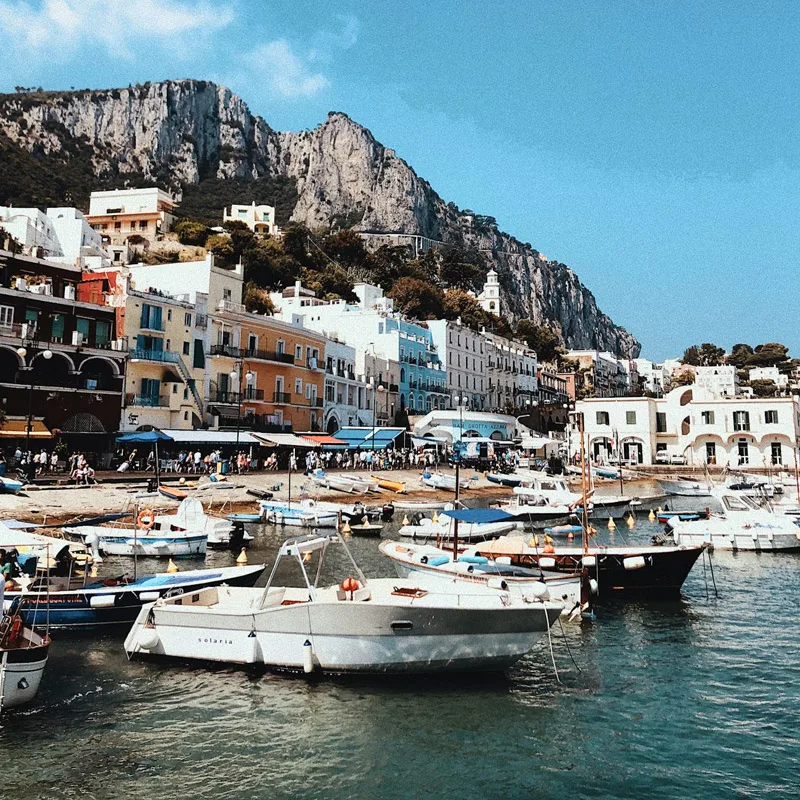
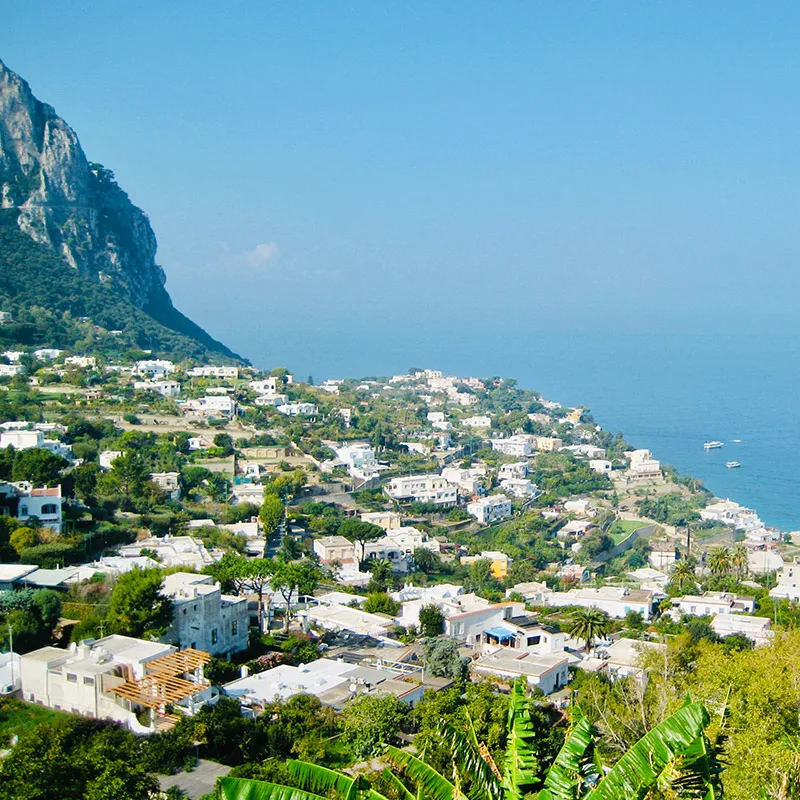
The island of Capri is located in the Gulf of Naples and has been an exclusive retreat since Roman times. It offers breathtaking views of Naples, Vesuvius, and the Amalfi Coast. It is easily accessible by ferry from Naples or Sorrento. The crossing takes only a few minutes. And these are the highlights on the island.
Faraglioni Rocks
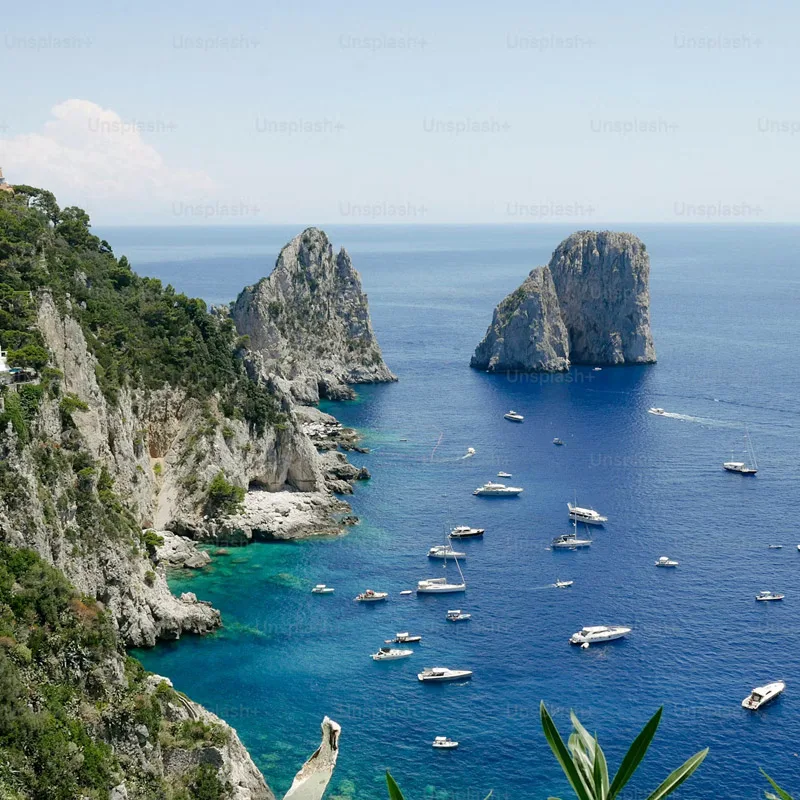
The three monumental Faraglioni rocks are the landmark of Capri and rise up to 109 meters out of the crystal clear water of the Tyrrhenian Sea. These imposing limestone rocks have been shaped by millennia of wind and waves. Particularly spectacular is the middle rock with its natural rock arch, through which traditional wooden boats pass on an island tour. Most tours start from the Marina Grande harbor and take about 2 hours, giving you the opportunity to jump into the water for swimming and snorkeling at particularly beautiful spots.
But you can also photograph the rocks perfectly without a boat trip. From the main town of Capri, the picturesque Via dei Faraglioni leads in serpentines down to the coast, where you can admire the nearest Faraglione from only about 50 meters away. This short but impressive hiking trail starts near the Gardens of Augustus and leads you over paved paths and stairs to the Belvedere Tragara – one of the most beautiful viewpoints on the island. From this terrace, you have a breathtaking view directly of the three Faraglioni rocks and the glittering sea, especially at sunset this place is romantic and perfect for photos.
Blue Grotto
The Blue Grotto (Grotta Azzurra) on Capri is world-famous for its magically glowing, intense blue water and is one of Italy’s most spectacular natural phenomena. The incredible play of light is created by sunlight entering the cave through an underwater opening and being reflected by the white sandy bottom. The water thus seems to shine in an unreal electric blue, while the cave ceiling shimmers silvery. This optical illusion is particularly impressive in the morning between 10 am and 1 pm when the sun is at the right angle. From Capri town or Anacapri, you first take the bus to the Grotta Azzurra, where small rowboats await you. The cave entrance is only about one meter high. When entering, you have to lie flat in the boat, and in high waves, the grotto is even completely closed.
Monte Solaro
Monte Solaro is the highest point on the island of Capri at 589 meters and offers the most breathtaking panorama of the entire region. The chairlift (Seggiovia) from the center of Anacapri to the summit is already an attraction in itself: In about 12 minutes you float in open single chairs over Mediterranean gardens, vineyards, and fragrant macchia vegetation to the top. The leisurely ride gives you time to enjoy the landscape and is also quite manageable for people with a slight fear of heights. Once at the top, an overwhelming 360-degree panorama awaits you over Capri, Naples, the smoking Vesuvius, and the entire Amalfi Coast all the way to Sorrento. In clear weather, the view even extends to Ischia and the southern coast of Italy.
Related posts
Ireland – A Round Trip on the Emerald Isle
Experience Ireland on an unforgettable road trip across the Emerald Isle. Discover breathtaking landscapes – all easily explored by car.
Cornwall – The picturesque Southwest of England
The county of Cornwall is an enchanting holiday destination that impresses with its breathtaking coastal landscapes and small fishing villages.
Cala Torta – the secluded beach
Cala Torta is a beautiful beach on the northeast coast of Mallorca, known for its turquoise waters and fine golden sand.
Es Trenc – The Caribbean beach
Es Trenc is situated on the southern coast of Mallorca, renowned for its pristine beauty and crystal-clear turquoise waters reminiscent of Caribbean beaches.
Questions, tips or notes?
Write a comment or send me an E-Mail…