


Hardly anyone goes to Nikko for the hiking, and that is exactly why I am writing this article. Most people know Nikko for the temples and THAT bridge. Two bus hours further up lies Oku-Nikko though, and that is where it gets really good. Marshland, larch forest and breathtaking waterfalls. Nikko is often sold as a day trip from Tokyo, and that is exactly the mistake. In one day you manage the temples or a hike, but not both, and both are worth it. We stayed 2 nights and did not regret a single minute.
Nikko, Shinkyō Bridge and Tōshō-gū
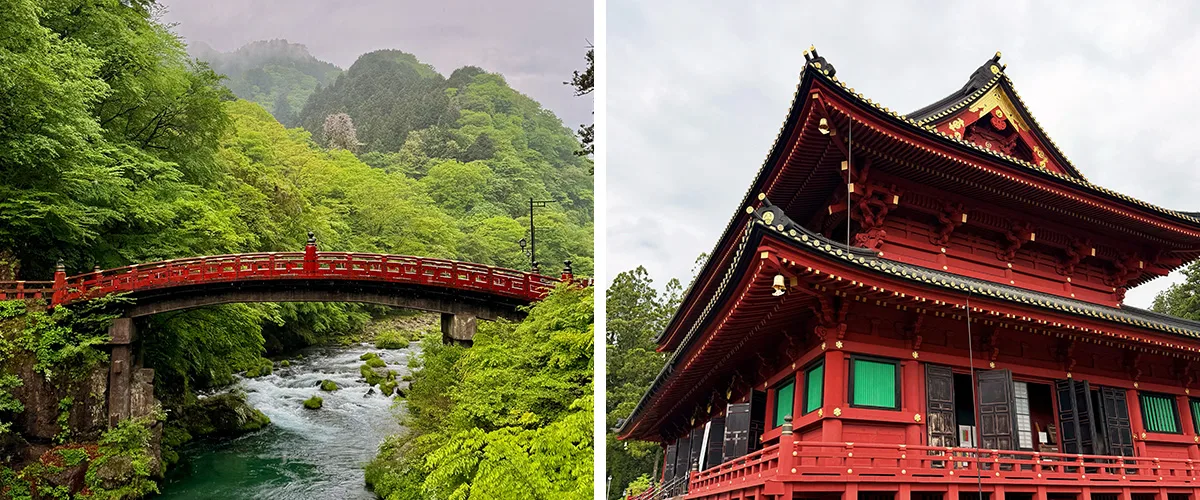
Nikko has always been a place of pilgrimage. Legend has it that two huge snakes appeared to the monk Shōdō Shōnin at the raging Daiya River and intertwined to form a bridge. The Shinkyō Bridge stands on exactly that spot today, one of the most photographed sights in the country. You can look at it from the road for free. Walking onto the bridge costs around 300 yen. All you can do is walk out and back again though. Pretty pointless really.
Across the road and up the hill the temple area begins, and it is so big it feels like it never ends. Since 1999 the whole area has been a World Heritage Site together with the Rinnō-ji and the Futarasan Shrine. The Tōshō-gū is the mausoleum of Tokugawa Ieyasu, the founder of the shogunate. His grandson had the complex built in 1636, with plenty of gold, lacquer and carvings.
Behind the sleeping cat, 207 stone steps lead up to Ieyasu’s grave. Up and back takes about half an hour. It is noticeably quieter up there than down below, and that alone makes the climb worth it. Admission is around 1,600 yen.
The late afternoon is the best time for the Shinkyō Bridge and the Tōshō-gū. During the day it gets extremely crowded. We went when the buses were slowly heading back, and had the bridge almost to ourselves.
My tip: stay 2 nights
With two nights you turn the whole rhythm of the day around. The day visitors arrive around ten and are gone again by late afternoon, while you are there in the morning and in the evening, when it is quiet. On top of that you can head straight up into the mountains in the morning instead of travelling two hours from Tokyo first.
We stayed at the Stay Nikko Guesthouse, a small place with a really lovely host called Kenji. He sat down with us and talked us through the hiking routes in detail. Which bus goes when, where we have to get off and which direction we are better off walking. Plus two tips for where to eat in town in the evening. Hosts like that are worth their weight in gold, it saves you a lot of research and you simply set off the next day.
Getting there & our plan
From Tokyo you take the Tobu Line from Asakusa to Tobu Nikko. The Spacia X is the nicest option. It is a limited express with a lounge and compartments, but you do have to reserve a seat in advance. Waaaaaay in advance! The town has two stations, almost next to each other. Tobu Nikko Station for all Tobu Line trains and Nikkō Station for all JR East trains.
Check in at your accommodation or just drop off the suitcases, then go and explore Nikko. Late afternoon, once most of the day visitors have gone, is the best time.
Grab breakfast and supplies at the konbini the next morning and then take the bus up to Oku-Nikko for the hike. In the afternoon the bus brings you back to Nikko, and after that you let the evening wind down in town. The next day you move on by train.
Everything about train travel in Japan is here by the way: Traveling through Japan with the Shinkansen
The route
The hiking does not happen in Nikko itself but up in Oku-Nikko. Plan around 3 hours for the roughly 6 to 7 kilometres. The bus takes you straight from the bus station in Nikko up into the mountains.
The ride all the way up takes a good hour and is a small experience in itself, with plenty of bends and hairpins. At the top the view opens up onto Lake Chūzenji, and after that it carries on along the shore further into the highlands.
You can of course walk the route the other way round, uphill from the bottom up to Yumoto Onsen. Just get off somewhere along the way and start from there. The bus stops at several points right on the trail. We decided to go downhill. That way the gradient is on your side, and the most famous waterfalls come at the end instead of right at the start.
Starting at Yumoto Onsen
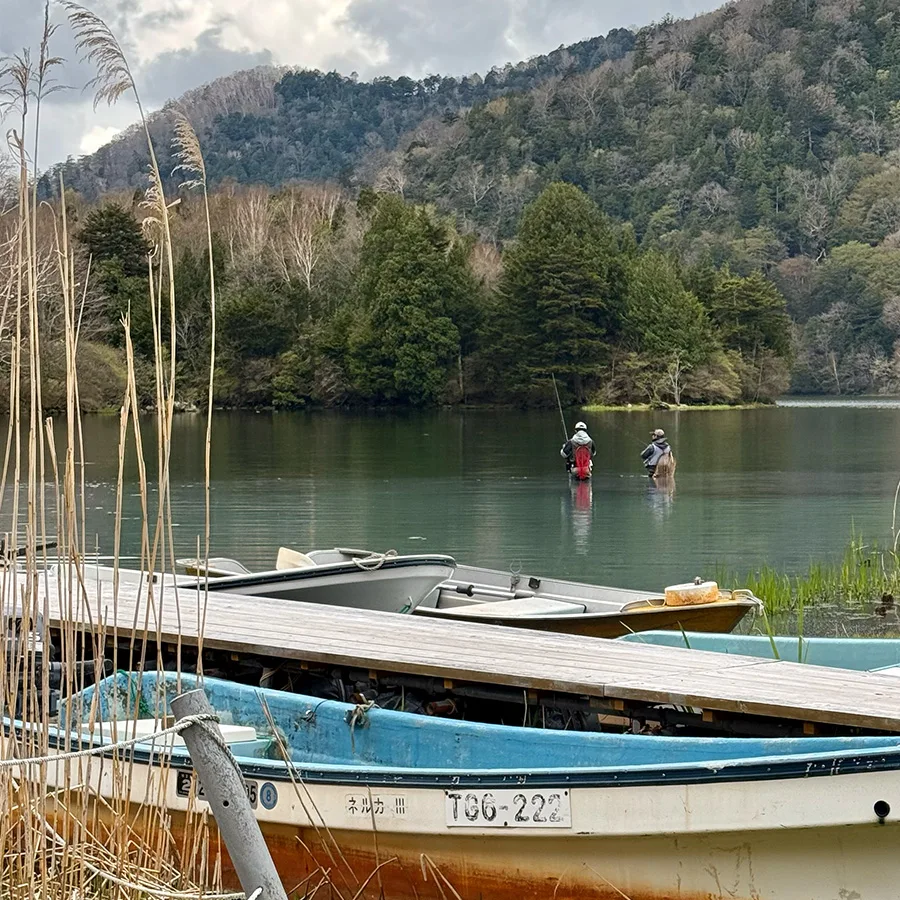
Yumoto is the last stop on the bus line and sits at around 1,500 metres on Lake Yunoko. A tiny onsen village, and you smell it immediately, because this is the source area and there is a distinct note of sulphur over everything. Behind the village you can take a look at the spring fields. The hot water comes out of the ground there in wooden frames and runs towards the lake as a milky white stream. The lake itself is fairly small. You can walk around it in either direction. We went for the shorter way.
The Yudaki waterfall
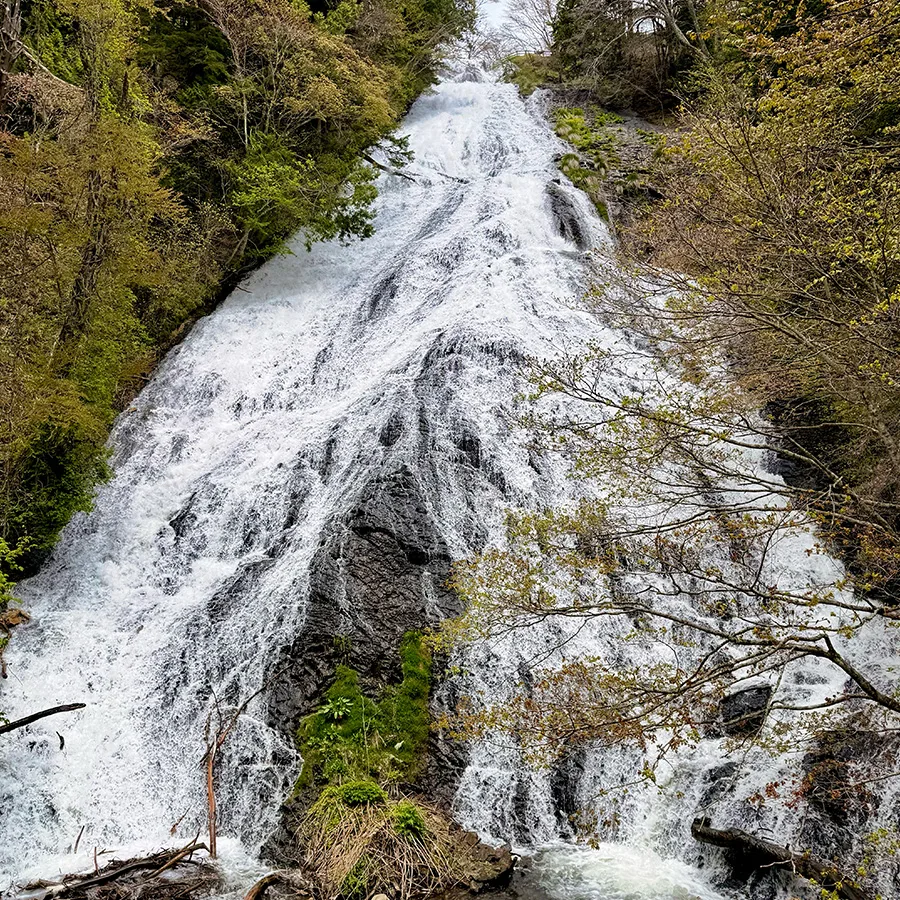
After about 45 minutes you are standing at the top of the Yudaki, the outflow of Lake Yunoko. Around 70 metres high and roughly 110 metres wide at the foot, a pretty impressive wall of water. At the edge you can get right up to the railing and watch the water disappear over the black rock. A narrow stepped path leads down right beside the falls to the lower pool. Down there you will find a platform for photos and a small snack bar with a konbini. That is the last point on the route, by the way, where you can still buy anything.
Along the Yugawa
From here you follow the crystal clear Yugawa, which winds its way through larch and birch. Halfway along there is a small pond with several benches, the classic rest stop on this tour. Several trails meet here, including one that leads up into the highlands. So stick to the signs for Senjōgahara. After that the forest thins out, and that is the sure sign that the marshland is about to begin.
Across the boardwalks through the Senjōgahara
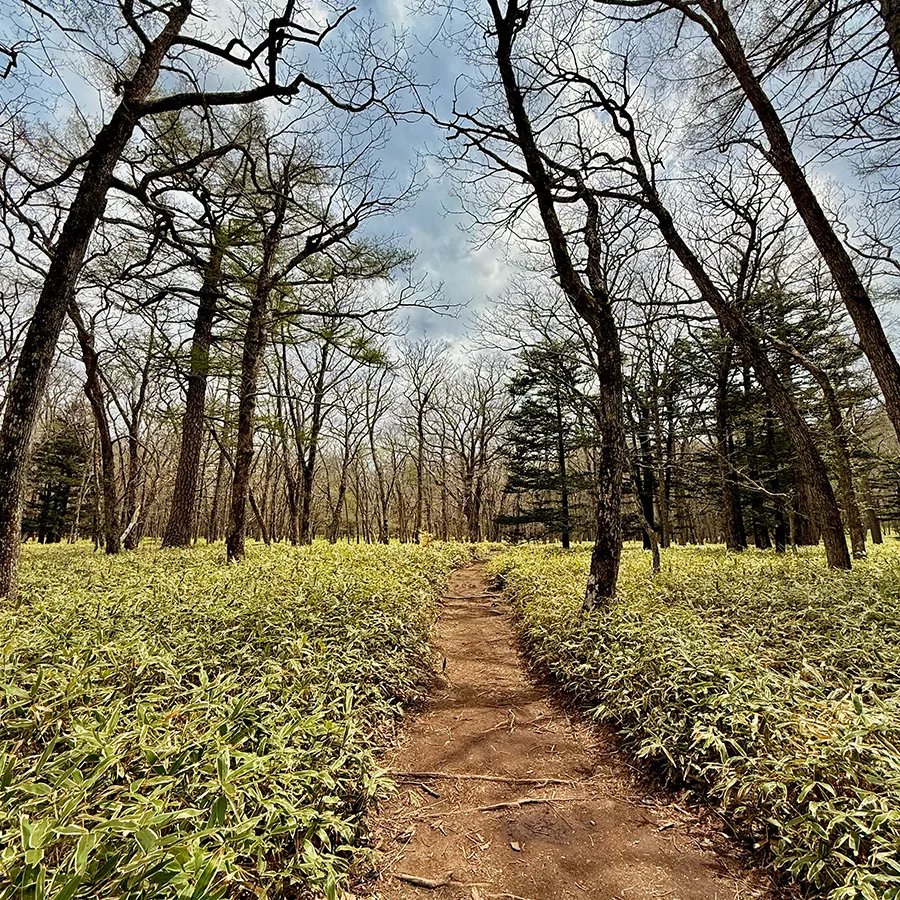
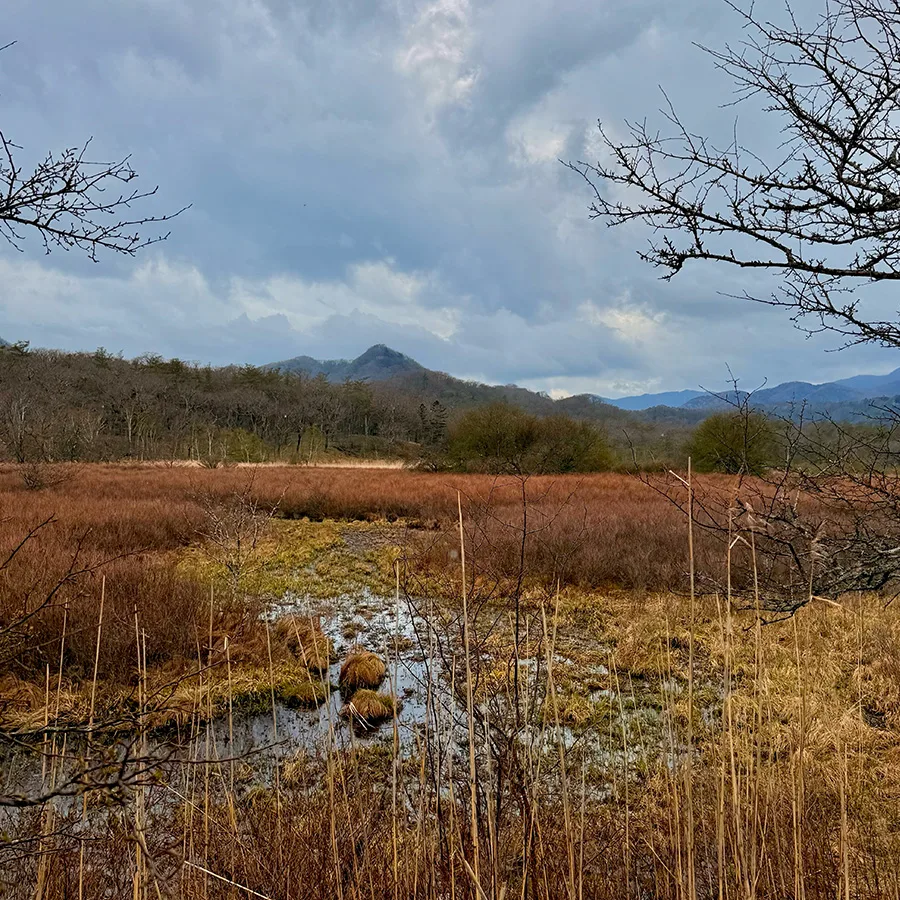
Then the forest opens up and you are standing in the marsh. The Senjōgahara lies at around 1,400 metres, covers about 4 square kilometres and has been a protected area since 2005. You walk on boardwalks almost the entire way. In October the grasses and larches change colour as well, and that is by far the best time. Halfway along is the Akanuma bus stop with benches. If your legs have had enough, you get on the bus there and head back early.
The Ryūzu Falls
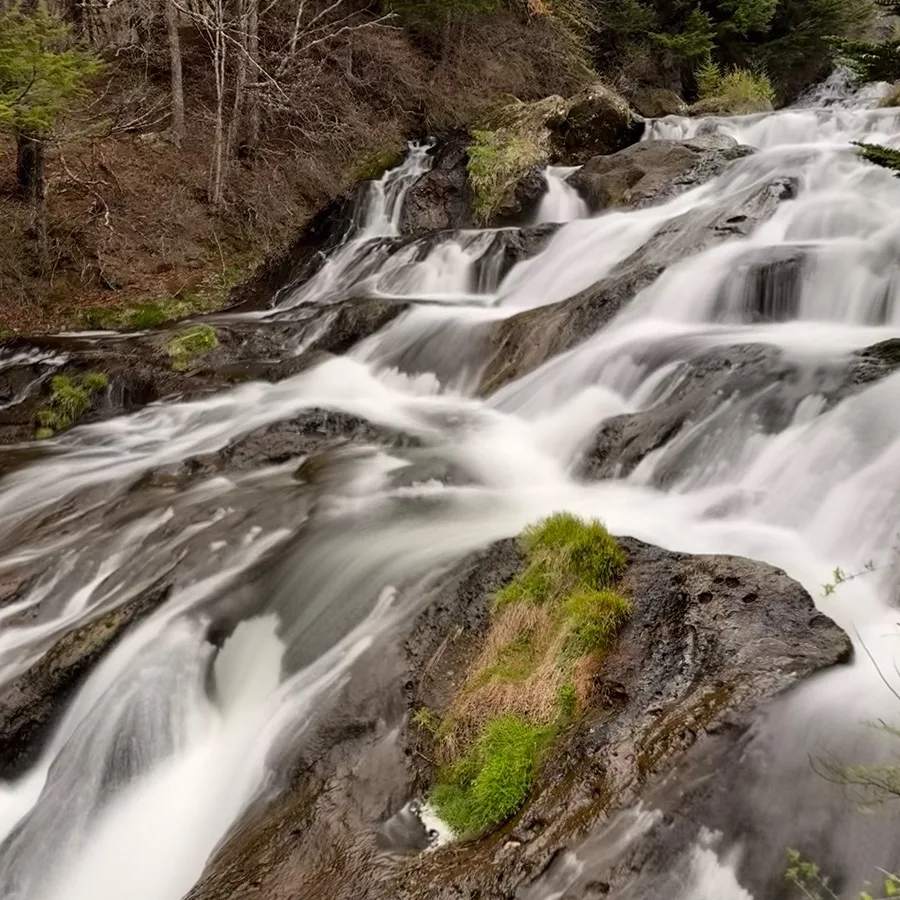
At the end it gets loud again. The Ryūzu Falls are not a single drop but a long cascade that shoots down over smooth rock and splits into two arms around a boulder right at the bottom. Hence the name, dragon’s head. Once you are down you can stop at the teahouse with a direct view of the falls. From here you could in theory walk back along the lower lake. We skipped it, because the path basically just runs along the road. Take the bus. The bus stop is a little way down the road.
Kegon no Taki
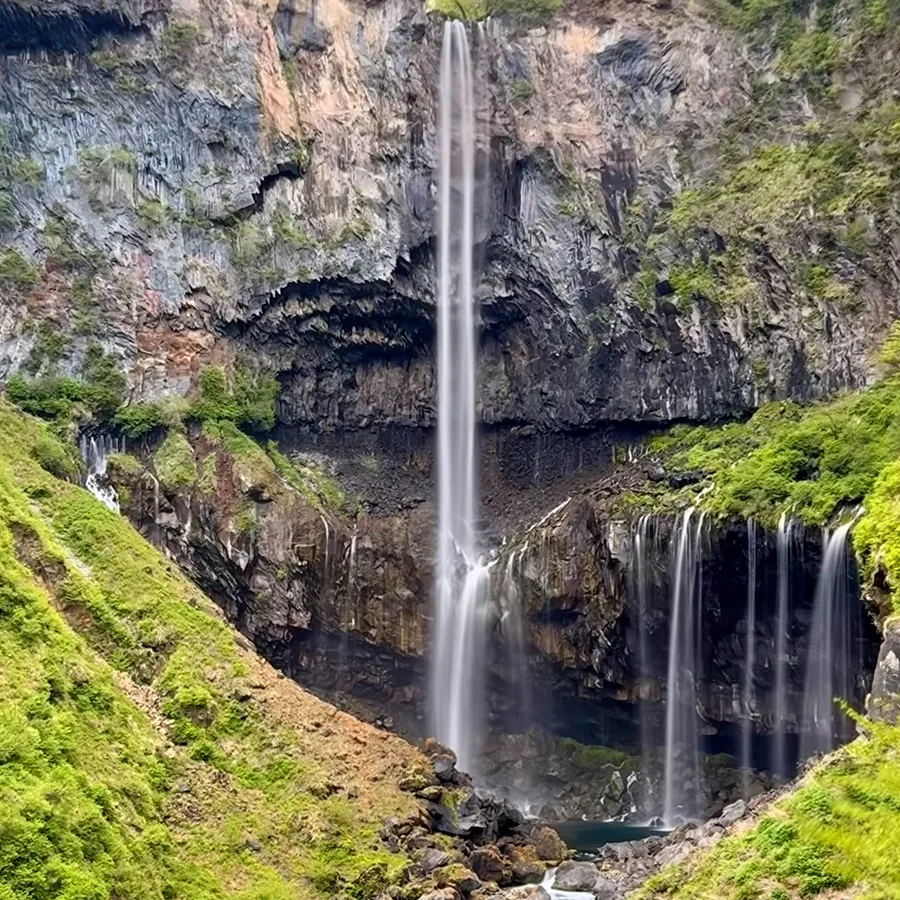
Get off at Chūzenji Onsen on the way back and take a look at the most famous waterfall in Japan. A must see if you are in the area. The Kegon drops almost 100 metres and is the only outflow of Lake Chūzenji. All of the lake’s water goes down right here. You can see it from above for free, but you get the real perspective from below. A lift takes you 100 metres straight down into the rock to a platform at the foot of the falls, right into the spray. Costs around 600 yen. Definitely do it, the view is spectacular.
Insider tips
It is a different season up there
Nikko sits at around 600 metres, Oku-Nikko at 1,400. That is easily five to eight degrees of difference, plus the wind across the open marsh. In October it can be just above freezing by the lake in the morning while it is still mild down in town. Pack one more layer than you think you need when you set off.
Autumn means traffic jams
The road between Nikko and Lake Chūzenji consists of 48 hairpin bends. Up and down run on separate routes. In October, when the leaves turn, everything grinds to a halt there and 40 minutes on the bus quickly becomes two hours. Leave early!
Related posts
Magome to Tsumago Trail Hike in Japan
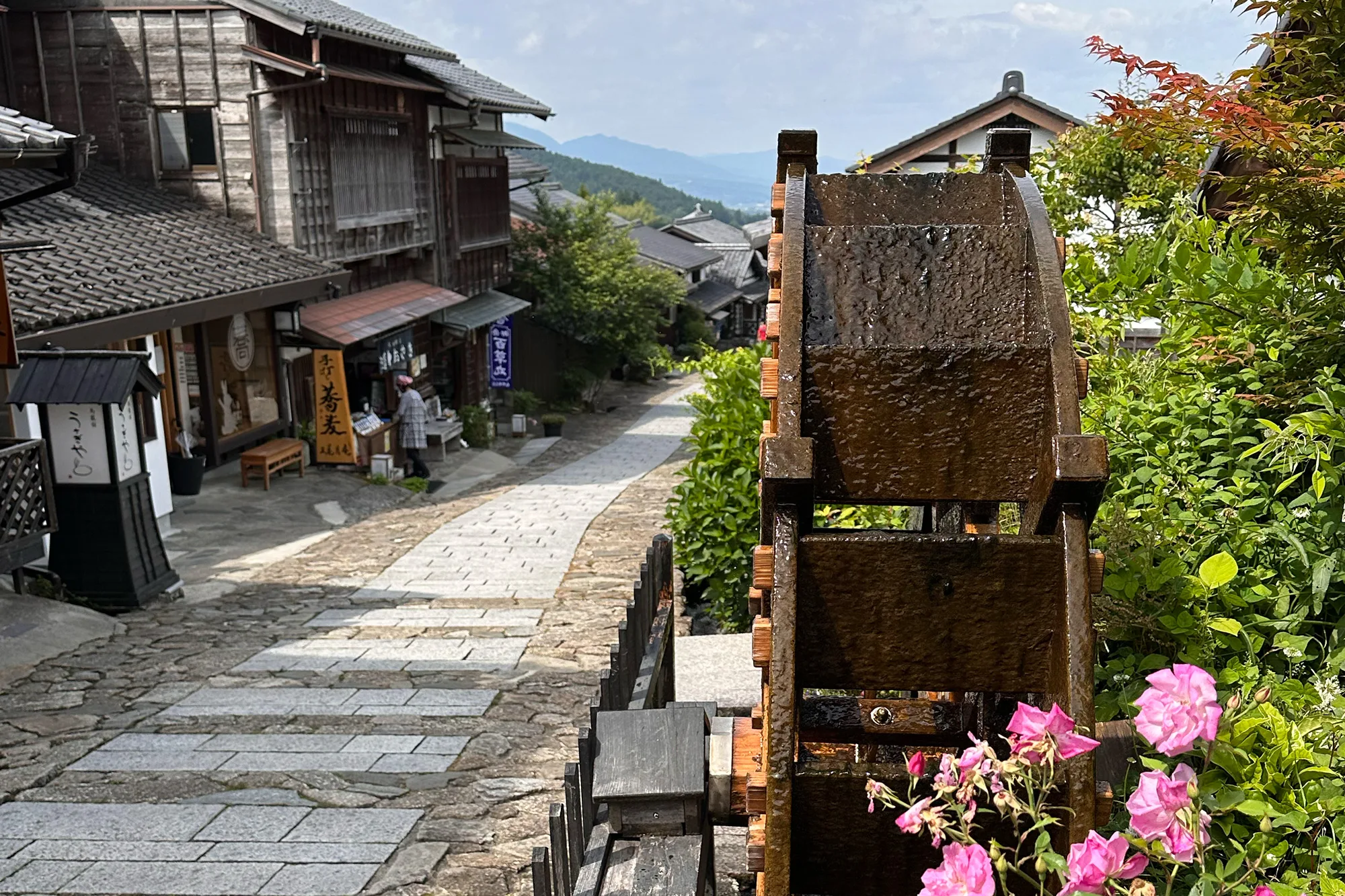
Hiking from Magome to Tsumago on the old Nakasendō: the route in detail with tea house, waterfalls, bus times and where to stay overnight
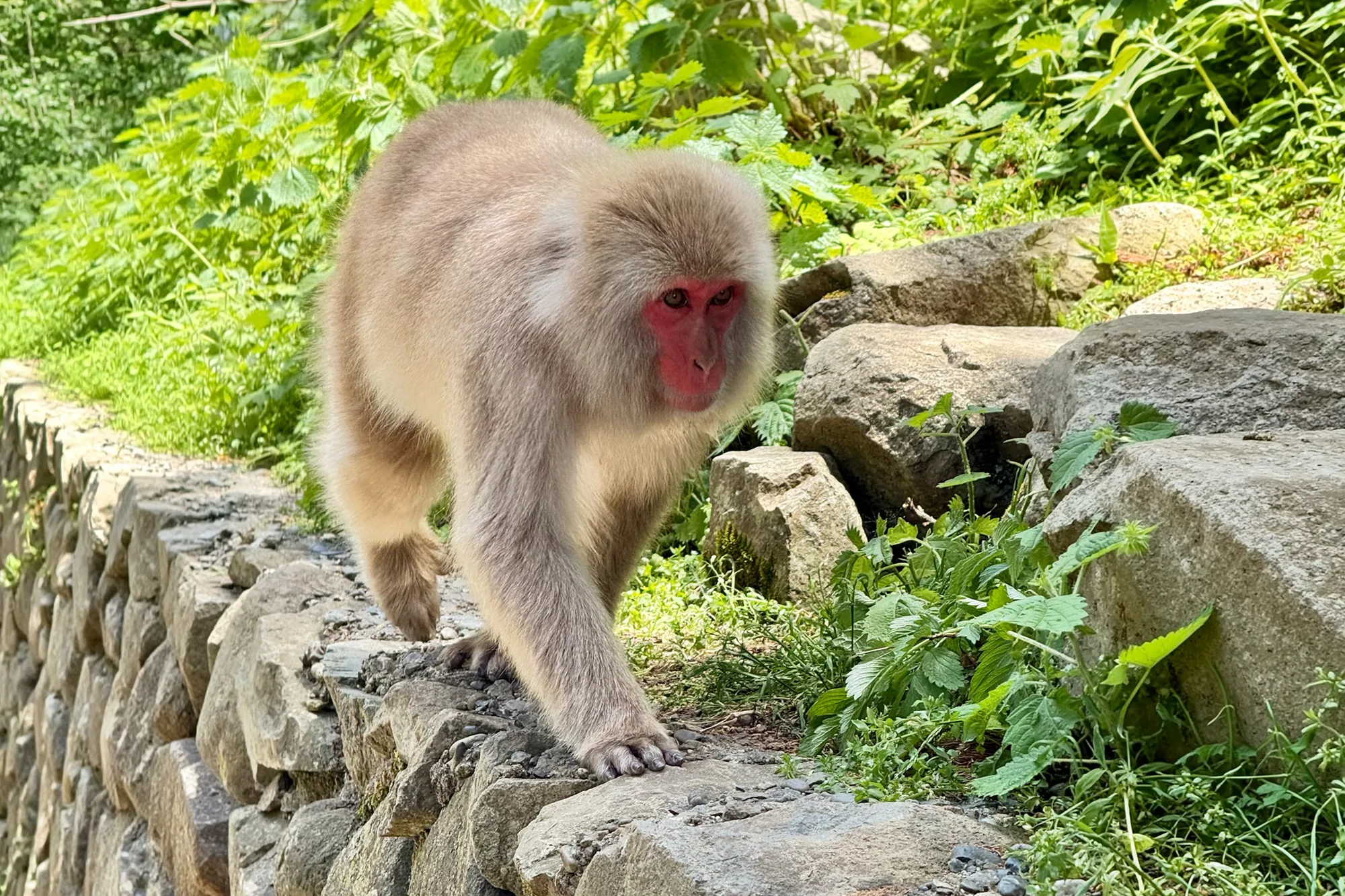
Bathing Snow Monkeys at Jigokudani Yaen-koen near Nagano
How to get your ticket for the trip from Nagano, the walk to the park and all the rules of conduct. Plus insider tips for your visit to the monkey park

Most beautiful Onsen in Japan
Discover the most beautiful Onsen in Japan: From idyllic mountain villages to hidden river springs – incl. access tips.
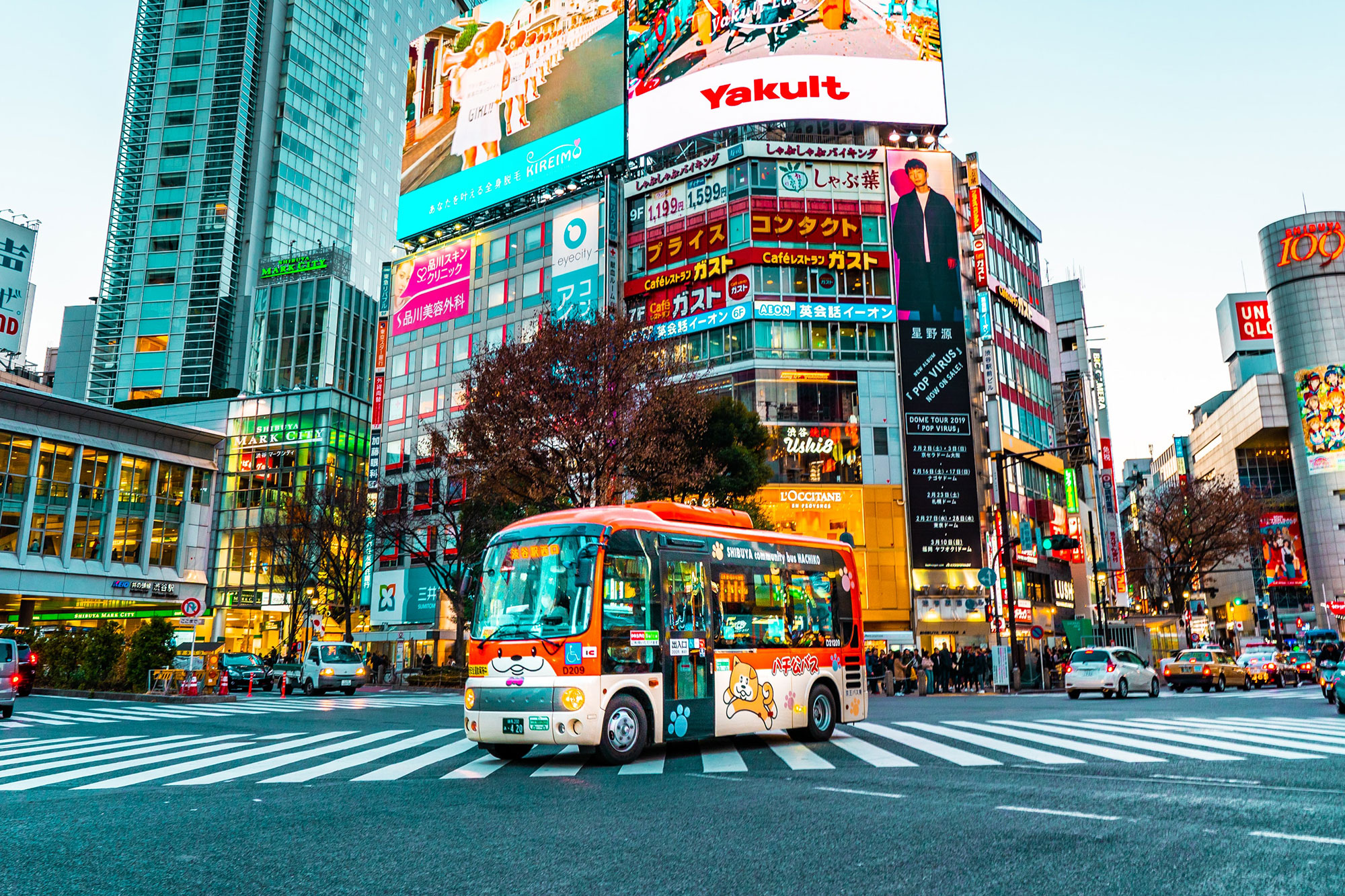
Taking the bus in Japan
Bus travel in Japan is a widespread transportation option used in urban areas as well as in rural regions.
Questions, tips or notes?
Write a comment or send me an E-Mail…