


I can recommend the hike on the Nakasendō to anyone who wants to go hiking in Japan for the first time. The Nakasendō was one of the five historic main roads of Japan in the Edo period and connected Tokyo and Kyoto. The path runs right through the mountains, with 69 post stations along the way. Between Magome and Tsumago in the Kiso Valley one section has survived, and you can still walk a wonderful trekking tour on it today.
Magome, the most beautiful starting point
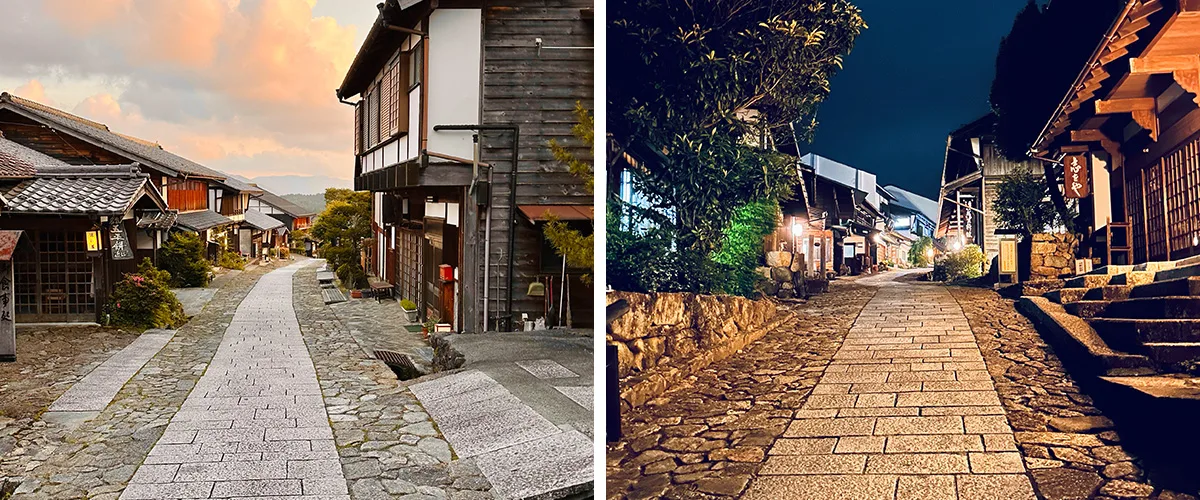
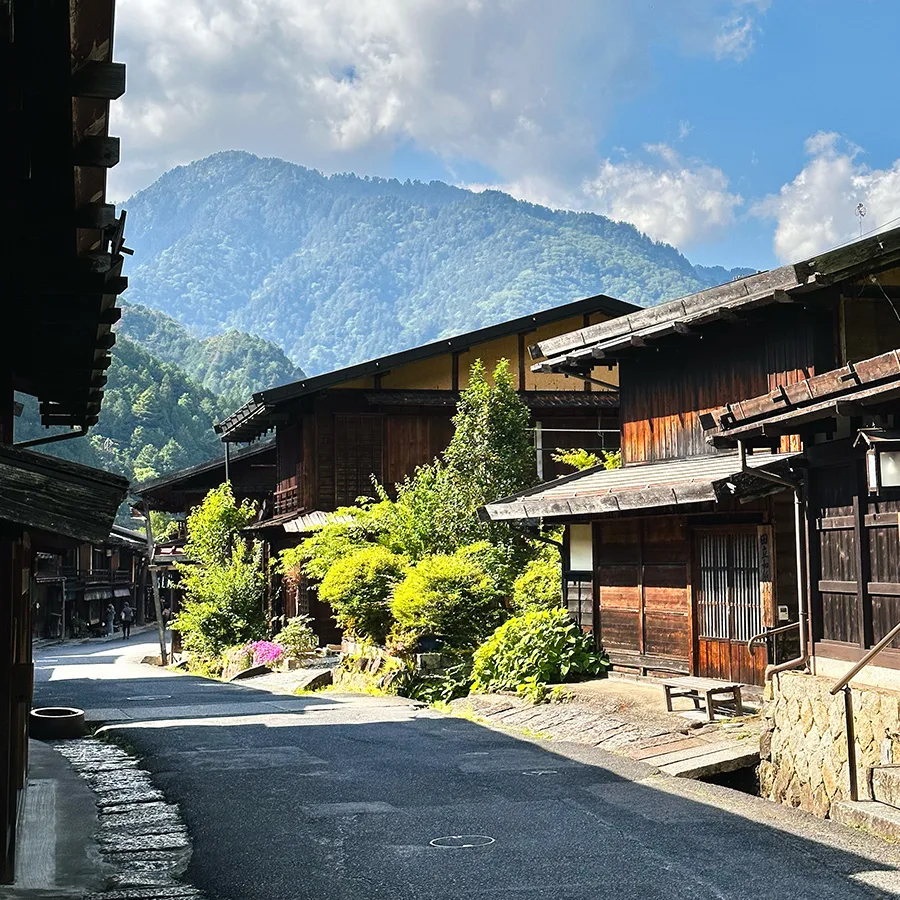
Magome is tiny and simply beautiful. A single cobbled lane climbs up the slope, dark wooden houses with deep overhanging roofs on both sides, water wheels in between and narrow channels carrying the water down the mountain. During the day the village is packed. Day trippers arrive by the busload, walk up the lane and leave again. And that is exactly why my most important tip for this tour comes now.
My tip: stay overnight
Magome is a completely different place in the morning and in the evening. From late afternoon it empties out and then the lane is almost yours alone. The same in reverse in the morning. The village slowly wakes up, the shops open one after another, and until the first buses arrive you have it to yourself.
We stayed at the Guesthouse Nedoko and would do it again in a heartbeat. Comfortable beds (not that common in guesthouses) and the host Mika is incredibly kind. She even picks you up at the bus stop and drives you and your luggage up to the house. That is not some extra service on the side, it is a lifesaver! Dragging suitcases up that cobbled slope is really no fun.
Getting there & our plan
In the morning take the Chūō Line to Nakatsugawa and from there the bus straight to Magome. Drop the suitcases at the guesthouse, grab a few snacks and drinks at the konbini and set off on the hike.
Depending on your pace and how often you stop, you reach Tsumago in the early afternoon and can stroll through the little village and pick up a few souvenirs. Only around five buses a day run between Tsumago and Magome and the last one back leaves in the late afternoon. That is the most important planning rule on this route. The road crosses the trail several times and the bus stops along the way, among others at the Magome Pass, at the Odaru waterfall and in Ōtsumago. If your legs give out earlier than expected, you simply get on at one of those stops and ride back early.
In the early evening you can wander through the empty lane in Magome and watch the sunset. Because the village lives off day tourists, almost everything is closed at night. Anyone who turns up without a plan stands in front of locked doors. So book ahead, or have someone book for you. Our host Mika took care of that for us and got us a table at the Izakaya Haginoya down in the village. The food was seriously good and the evening was exactly what you want after a hike.
The next morning you can stroll through the waking village again and drop into a few shops. Once you are back down, the bus takes you onward.
The route
It is about 8 kilometres and if you take it easy you are out for 3 hours. Walk the route from Magome to Tsumago, there is noticeably less climbing that way. You cannot get lost, everything is signposted in English too.
Up to the Magome Pass
The first stretch is the only one where you really break a sweat. You walk up the cobbled lane, past the Wakihonjin and the Shimazaki Tōson Museum, and after barely ten minutes you are out of the village. Behind it comes the Nashinokizaka, a cobbled slope with an old water wheel, and from the viewpoints you can see Mount Ena in clear weather.
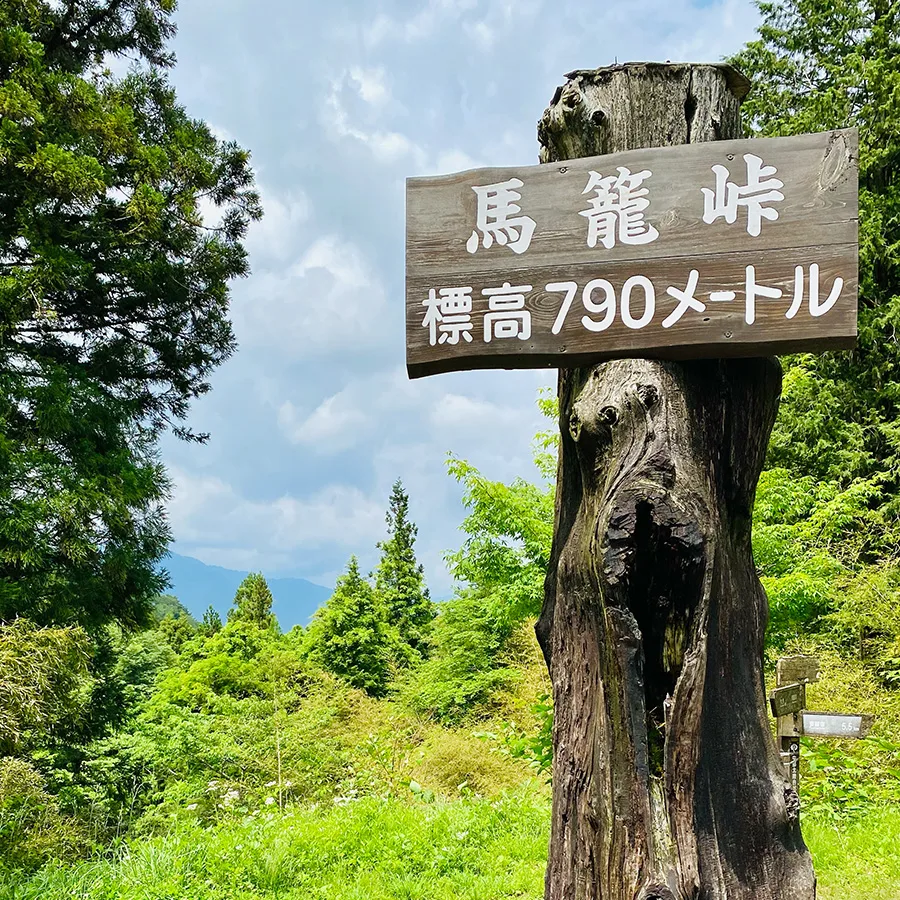
Further up there are old stone monuments along the path, then the Kumano Shrine and shortly after that the Magome Pass at around 800 metres. The border between Gifu and Nagano runs through here, so you change prefecture in the middle of the forest. From here on it is almost all downhill.
The old tea house Ichikokutochi
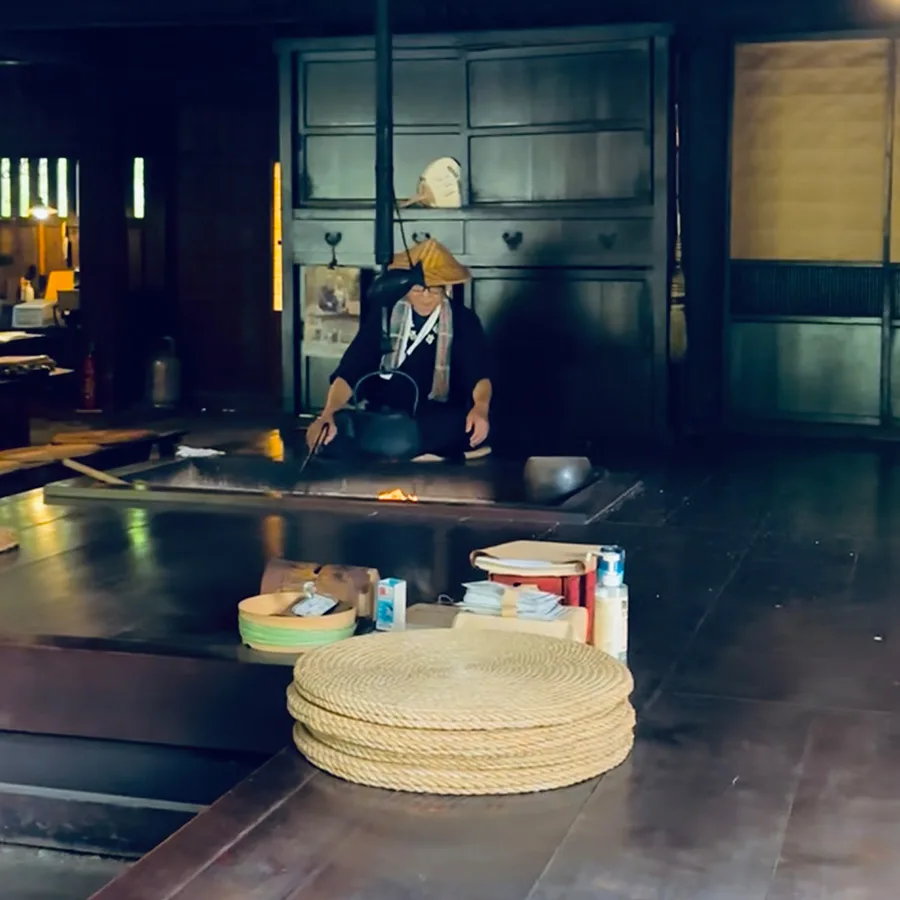
A good ten minutes after the pass comes my favourite spot on the route: the Ichikokutochi Tateba-jaya, a roughly 200 year old rest house that has been restored and is open again today. Inside there is an earthen floor, an open hearth in the middle, and a volunteer host who puts a cup of green tea and a sweet in front of you. The tea costs nothing, there is only a donation box so the fire keeps burning.
Sit down even if you are not tired. It is the one place on the route where you really understand what this must have felt like 300 years ago. Right behind the house stands the small Koyasu Kannon shrine.
The Odaki and Medaki waterfalls
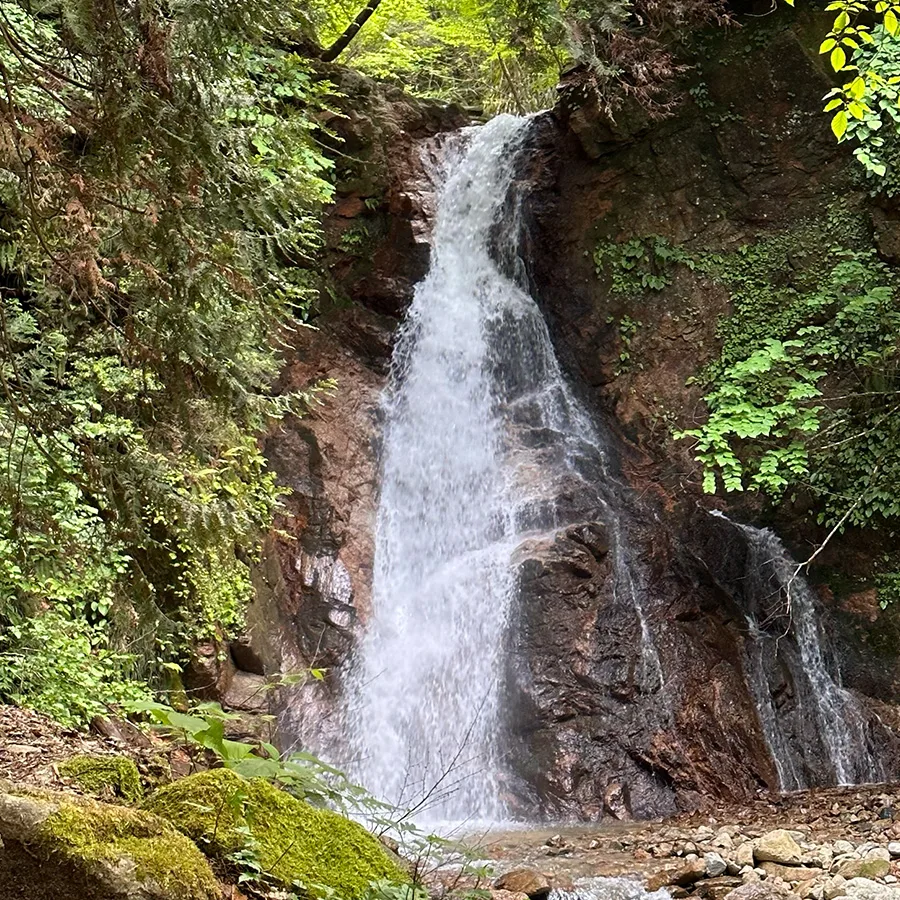
After about an hour it gets louder. The path crosses a bridge and shortly after that a small trail branches off to the two waterfalls, three minutes off the route. Odaki is the male waterfall, Medaki the female one. Legend has it that Miyamoto Musashi, the most famous swordsman in Japan, cooled off here.
The detour is worth it, not least because it is noticeably cooler down there in summer.
Rice terraces, stone Buddhas and Ōtsumago
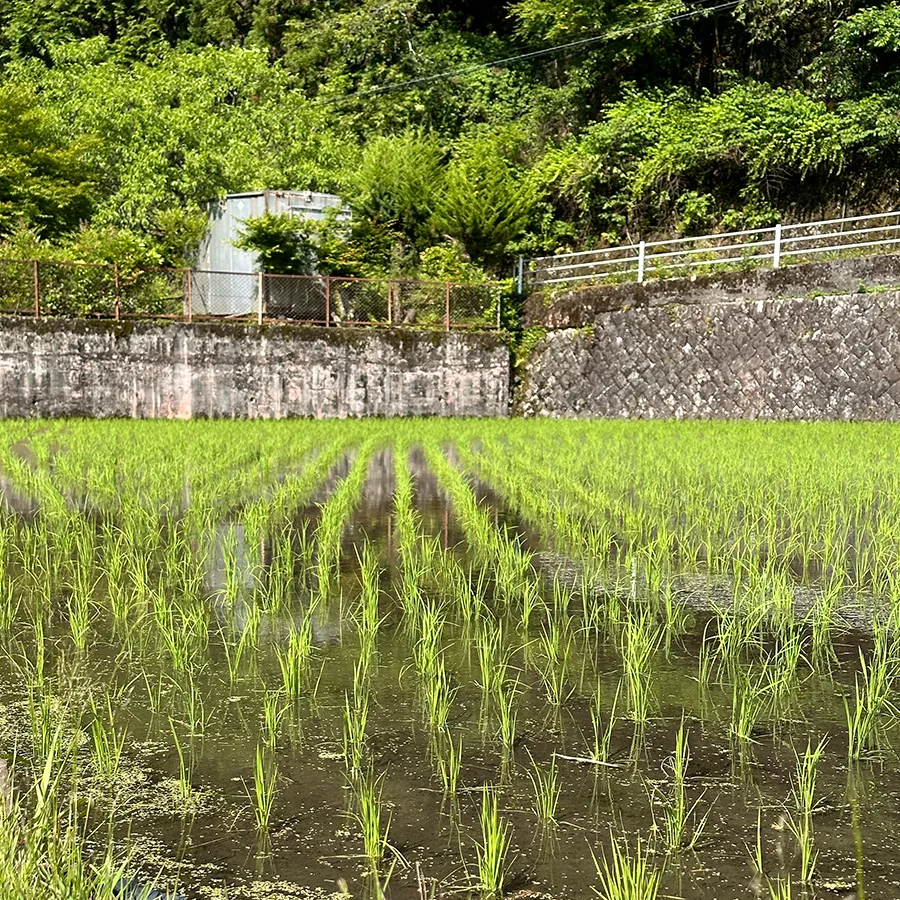
After that the path gets gentler. You pass the Kurashina Shrine, cross a bridge, then walk along terraced rice fields, and at the side of the path sits the Gyūtō Kannon, a weathered stone Buddha.
Shortly after comes Ōtsumago. This was not a post station but an ai no shuku, a stopover for those who did not make it to the next station. Several old hatago still stand here, inns from the Edo period, and people still live in some of them. From here it is only about 20 minutes to Tsumago, first across two bridges, then past the small power station.
Arriving in Tsumago
Tsumago was the 42nd of 69 stations. When the village was close to falling apart in the 1960s, the residents started restoring the houses themselves in 1968, long before heritage protection was a topic in Japan. You walk through the Masugata, the deliberately kinked stretch of road that was meant to slow down attackers, and then past the Honjin and the Wakihonjin.
Tsumago is absolutely worth seeing. For me it still does not match Magome. Have a look around, drink a coffee and then head back.
Insider tips
The bear bells
Bells hang on posts along the path and you pull them as you walk by. That is not a decorative gimmick, black bears live in the Kiso Valley. The bells are there to tell them in good time that somebody is coming, so they can get out of the way. I never saw one, but we rang every single bell anyway. You can also get your own kuma suzu, a small bear bell for your backpack. It only costs a few hundred yen. You see them dangling from almost every Japanese backpack.
Send your suitcase ahead
If you do not want to stay overnight, there is a luggage service just for this stretch. You drop your suitcase off at the tourist office in Magome in the morning and pick it up again at the tourist office in Tsumago in the afternoon. It costs around 1,000 yen per bag. On request they also deliver to Ōtsumago. Alternatively there is the regular Japanese luggage forwarding service, more on that here: Luggage service in Japan
Related posts

Washing clothes on your Japan trip
Washing clothes in Japan – Don’t worry, you don’t have to pack your entire wardrobe for the trip! Here’s what you need to know.

Luggage storage at 7-Eleven in Japan
No free lockers? 7-Eleven now offers luggage storage in Japan via app booking. Secure, affordable, and available 24/7.

Day trip to Hakone from Tokyo
Hakone is located in the Fuji-Hakone-Izu National Park and is perfect for day trips thanks to its good transportation connections to Tokyo.

Southern Italy round trip: Capri, Mount Vesuvius and the Amalfi Coast
Discover Capri, Mount Vesuvius and the Amalfi Coast: All highlights, arrival tips and insider info for your perfect Southern Italy round trip
Questions, tips or notes?
Write a comment or send me an E-Mail…